
About
Theory of Change
When underserved young people gain access to quality digital education, mentorship and practical learning, they are better equipped to pursue employment, entrepreneurship and community leadership.
The pathway
From exposure to employment
- Stage 1
Engage
Schools, community leaders and local government stakeholders are engaged to understand the specific digital skills gaps affecting young people in each location. No two communities have the same starting point.
- Stage 2
Design
Findings from community consultation inform programme design, curriculum adaptation and implementation planning. Programmes are shaped by the institutions receiving them, not delivered to a fixed template.
- Stage 3
Deliver
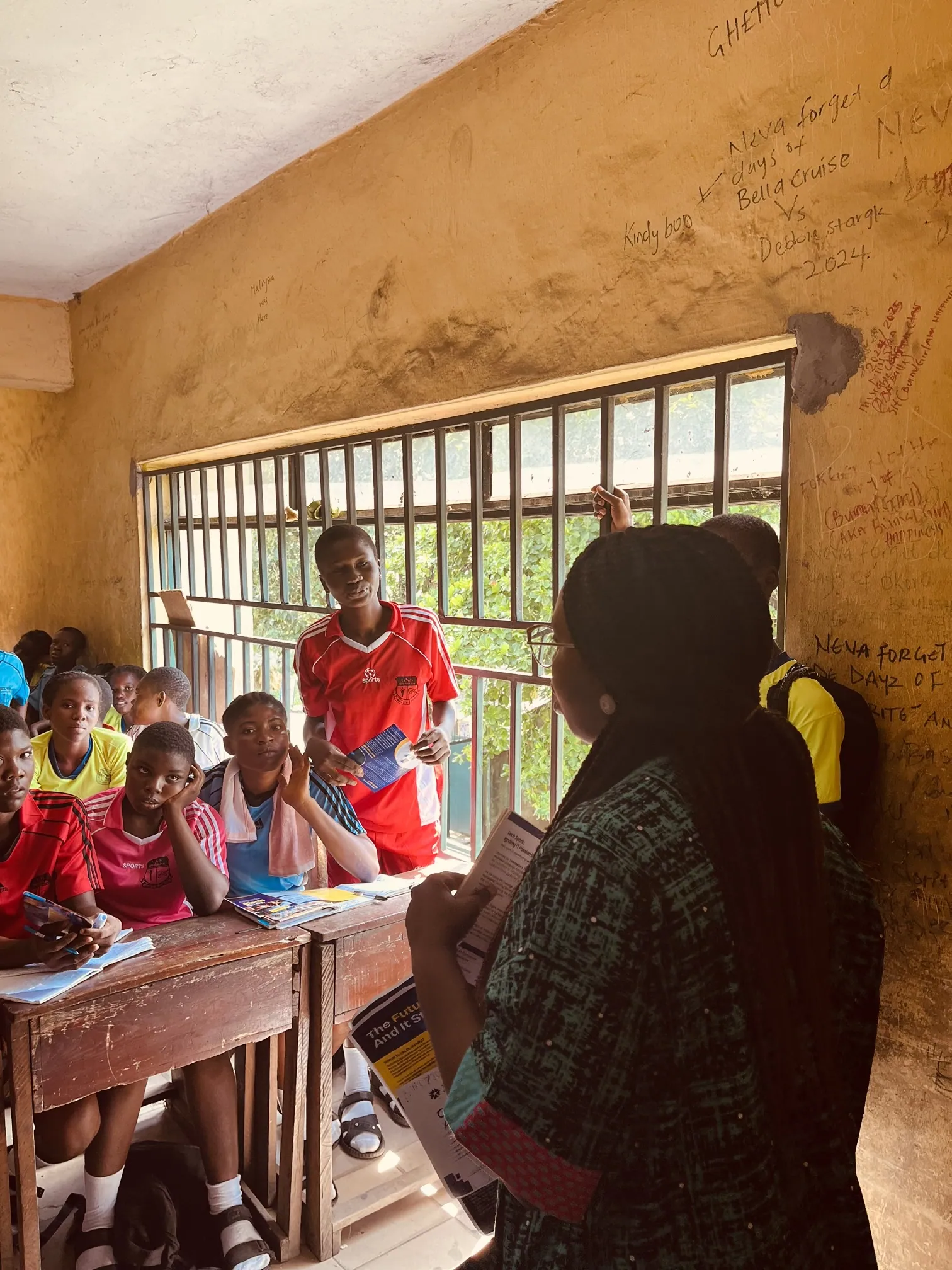
Trained volunteers and facilitators deliver practical, learner-centred sessions across secondary schools and community settings. TechSpark brings scale. The Scholars Programme brings depth.
- Stage 4
Monitor
Programme records, participant feedback and delivery reviews help TMF understand what is working and where each programme needs to improve.
- Stage 5
Review and learn
Post-programme reviews ensure lessons are incorporated into the next cycle. The closing review feeds back into the next design stage, so every cohort makes the next one better.
The scale of the gap
How big is the problem we're working on
Nigeria's secondary school enrollment rate sits at under half of eligible children nationally. Among those who are enrolled, national assessment data shows barely 3 in 10 senior secondary students demonstrate basic computer proficiency, and the gap is starkest along exactly the line TMF was built to work against: public rural schools are far less likely to teach computer studies at all compared to private urban ones.
In Rivers State alone, over 200,000 students are enrolled in junior secondary school. TMF has reached 3,750 of them so far. We publish that ratio deliberately, because closing a gap this size takes more than one organization, and we would rather be precise about how much runway is left than imply the work is close to done.
The pipeline
What each programme actually produces
What TechSpark actually produces
A TechSpark visit or conference session moves a student through three things: exposure to what a technology career actually looks like, a hands-on experience that makes it feel real, and a clearer understanding of available pathways. That supports a more informed choice about pursuing a tech-related path in further education.
What the Scholars Programme actually produces
The Scholars Programme serves final-year undergraduates, university graduates, NYSC corps members, and post-NYSC job-seekers, all close enough to the labor market for structured training, mentorship, and a capstone project to translate into internship placement and improved employment outcomes. Four Cohort 1 scholars went on to internship placements.
The evidence
What we measure
TMF uses programme records, participant feedback and delivery reviews to track reach and improve delivery. The Scholars Programme uses a digital literacy and workforce readiness screening instrument to select candidates, and tracks outcomes for every graduate.
We are also completing the design of the National Baseline Study on Digital Readiness, Skills and Youth Employment Pathways, a nationally comparable study drawing on a national population sample of young people aged 15–35. Implementation begins on funding confirmation.