
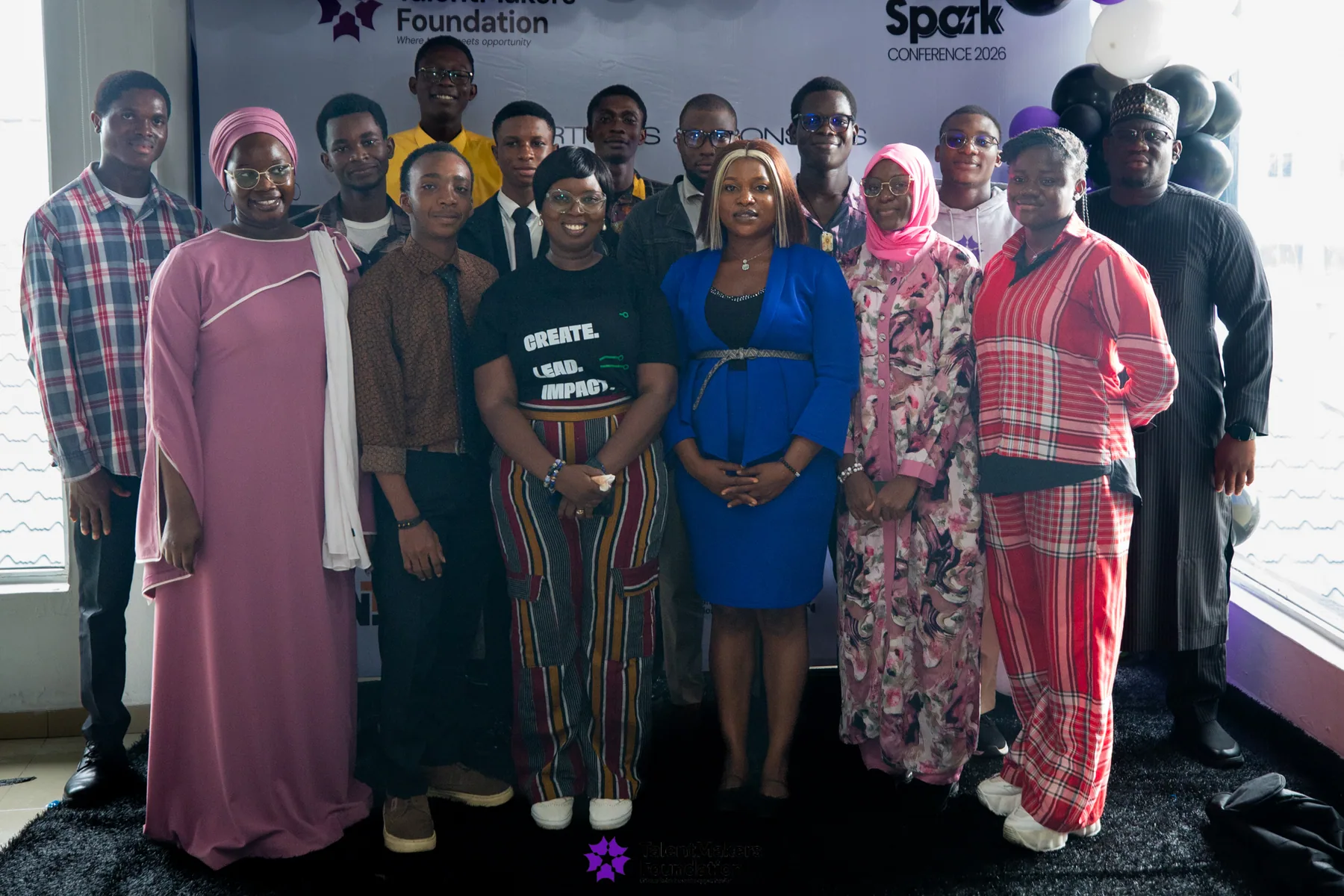
Ten scholars completed TalentMakers Foundation's first Scholars Programme cohort. Every graduate completed the programme, including capstone work, and four progressed into internship placements. The clearest lesson from Cohort 1 is not that one timetable or course guarantees an outcome. It is that structured learning, mentorship, real deadlines and a visible next step give emerging talent a stronger way to turn potential into demonstrable work.
Cohort 1 did not run to a fixed timetable, so it would be inaccurate to describe it as a twelve-month programme. Scholars progressed at the pace their circumstances allowed, while the standard for completion remained clear. We would rather a scholar finish well than finish simply because a calendar says the programme is over.
What is the TMF Scholars Programme?
The Scholars Programme is a structured technology pathway for Nigerian students aged 15–24. It combines track-specific learning, an assigned mentor, applied projects, workplace readiness and support towards a named next step.
The programme currently offers three core tracks:
- Software Engineering
- Data & Analytics
- Cybersecurity
Individual interests can develop in different directions, but each scholar needs a clear base from which to learn. Defined tracks make it easier to build coherent foundations, set relevant projects and give focused feedback.
No prior coding experience is required. Applicants are selected through a structured assessment covering digital literacy, aptitude and workforce readiness. The purpose is to identify commitment and potential rather than reward only those who have already had access to technical training.
Why Cohort 1 was deliberately small
A first cohort is where a programme has to prove that its structure works in practice. A smaller group makes close mentorship, regular review and honest adjustment possible. It also makes it harder for individual scholars to become anonymous participation figures.
Ten scholars completed Cohort 1. That number is modest by design and reported plainly. Each graduate has a name, a completed programme record and capstone work. The cohort is not presented as evidence that every participant will follow the same career path. It is evidence that a defined group moved through the programme's completion requirements and that four graduates have already progressed into internships.
This is the kind of evidence TMF wants to build: specific enough to check, careful about what it proves and connected to a real next step.
How the learning pathway worked
The programme moves through four practical stages. They are not isolated modules; each stage supports the next.
Foundations
Scholars begin with core technical skills and learning habits relevant to their chosen track. Foundations matter because advanced tools are difficult to use well without an understanding of the underlying ideas. Regular cohort sessions also help scholars build the discipline of returning to difficult work rather than moving on whenever a topic becomes uncomfortable.
Applied practice
Learning becomes more useful when a scholar has to make decisions. Track-specific exercises and projects require participants to interpret a problem, select an approach and test the result. Mentors can then respond to the work itself, not just whether a lesson was attended.
Workplace readiness
Communication, collaboration, problem-solving and professional conduct develop alongside technical skills. A person may understand code, data or security and still struggle to explain a decision, receive feedback or work reliably with others. Treating these abilities as part of the programme rather than an afterthought better reflects what further study, internships and employment require.
The next step
Completion should lead somewhere visible. Scholars receive support with portfolios, interview preparation and introductions to placement opportunities. The programme cannot promise an internship or job to every graduate. It can help each scholar present completed work, explain what they know and approach opportunities with stronger preparation.
Why every scholar completes capstone work
A capstone is a bridge between learning and evidence. It asks a scholar to bring together the skills developed across sessions and apply them in a coherent piece of work. That is more demanding than following a tutorial because the scholar must make choices and account for them.
All ten Cohort 1 graduates completed capstone work. We do not publish project details unless those details are verified and suitable for public use. The important programme standard is consistent: completion includes work a scholar can discuss and use as part of a developing portfolio.
Capstones also give mentors a better basis for feedback. They reveal where a scholar understands the process, where support is still needed and how clearly the person can communicate what they built or analysed. That information helps shape the next stage of development.
Mentorship made the work accountable
Each scholar had a mentor assigned to their work. Good mentorship is not the same as doing the task for someone or offering encouragement without detail. It creates a regular point of accountability and a place for precise questions.
A mentor can ask a scholar to explain a choice, identify an assumption or return to an unfinished section. The scholar still owns the work. This relationship matters because technology learning often contains periods when progress is difficult to see. Regular review helps turn uncertainty into a specific next action.
Real deadlines add another layer. They teach scholars to scope work, communicate early when something is blocked and distinguish a finished version from an endlessly postponed idea. These habits are relevant in every track and in almost every workplace.
What the verified outcomes show
TMF's current records show:
- 10 Cohort 1 graduates
- Capstone work completed by every graduate
- 4 internship placements
- Koki N. Saviour progressed into an AI Product & Solutions internship
- Samuel I. Daniel progressed into an AI Product & Solutions internship
- Obulor T. Destiny progressed into an AI Product & Solutions internship
The fourth placement is included in the verified aggregate, but TMF does not publish a person's specific detail unless it is available and appropriate to share. The remaining graduates' public records state that they completed the Scholars Programme, including a capstone project.
These facts should not be stretched into a promise that every future scholar will secure an internship. They show that the pathway has already connected some graduates to a workplace opportunity and that every graduate reached the programme's completion standard.
Readers can see the current graduate records on the Scholar Stories page and the wider verified figures on Impact: By the Numbers.
What a scholar owns in this process
The programme provides structure, but the scholar remains the protagonist. The work depends on attending sessions, making time to practise, meeting deadlines, asking questions and responding to feedback. Mentors can clarify a path; they cannot walk it on a scholar's behalf.
This matters in how outcomes are described. TMF did not “make” four internships happen in isolation. Graduates developed skills, completed work and presented themselves for opportunities. The programme helped make those efforts more legible and connected them to a next step.
That language is more accurate and more respectful. It recognises support without taking ownership away from the young people doing the work.
What Cohort 1 changes for the next cohort
A first cohort provides operating lessons as well as graduate outcomes. It shows where learners need more explanation, how mentorship can be organised, what a realistic deadline looks like and how capstone expectations should be communicated.
The standard remains consistent: structured assessment, regular sessions, track-specific practice, mentorship, workplace readiness, capstone completion and preparation for what follows. The timetable can remain responsive to participants' circumstances without making the completion standard vague.
For future applicants, this creates a clearer picture of the commitment involved. The Scholars Programme is not a one-off workshop or a certificate for attendance. It is a pathway that asks for sustained work and produces evidence a scholar can carry forward.
How students can apply
Applicants should first review the eligibility requirements. The programme is for Nigerian students aged 15–24 who can attend regular cohort sessions and access a device and internet for at least six hours a week. No prior coding experience is required.
The application asks about the applicant, their preferred area and the problem they would like to work on. Selection is not based only on how polished a personal statement sounds. A structured assessment helps the programme understand digital literacy, aptitude and workforce readiness.
Current application information is available on the Apply to the Scholars Programme page.
How partners can support the pathway
Future cohorts need more than funding. Practitioners can mentor, review curricula or facilitate a practical session. Employers can help clarify entry-level expectations and create appropriate placement conversations. Schools and institutions can open access to students and facilities.
Funders can support a full programme track and ask for reporting grounded in verified programme records. Organisations interested in contributing can review the routes on the Partner With Us page.
The aim is not simply to make the next cohort larger. It is to increase access while protecting the features that made Cohort 1 meaningful: attention to individual progress, clear standards and a next step linked to completed work.
Frequently asked questions
How many scholars graduated from Cohort 1?
Ten scholars completed Cohort 1. Every graduate completed the Scholars Programme, including capstone work, and four progressed into internship placements.
Did Cohort 1 run for twelve months?
No fixed duration is stated for Cohort 1. Scholars progressed through regular cohort sessions at the pace their circumstances allowed, while meeting the same completion expectations.
Is prior coding experience required?
No. Applicants are selected through a structured assessment that considers digital literacy, aptitude and workforce readiness. The programme selects for commitment and potential, not for a head start.
What happens after capstone completion?
The next-step stage includes portfolio development, interview preparation and introductions to placement opportunities. An internship is not guaranteed, but four Cohort 1 graduates have progressed into placements.