
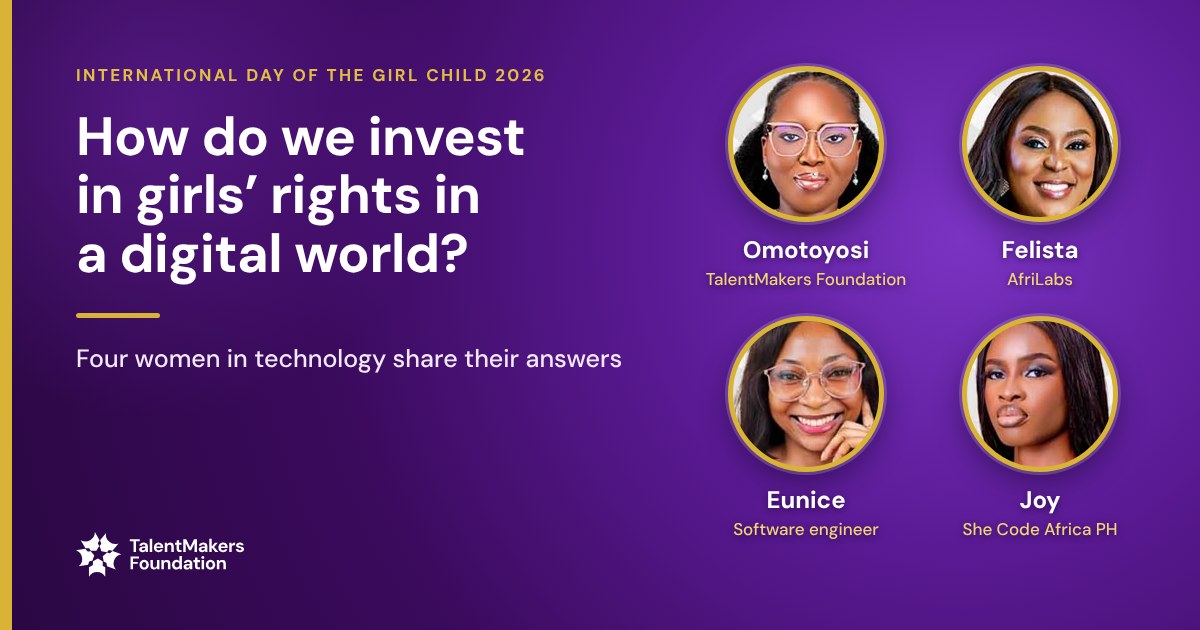
Investing in girls' rights in a digital world means making sure girls can reach technology, build skills with it, find mentors and speak up for their own work. That was the shared answer from four women in technology at TalentMakers Foundation's International Day of the Girl Child webinar on 11 October 2026.
TalentMakers Foundation (TMF) is a Nigerian nonprofit, registered in Abuja with its operational base in Port Harcourt, that builds technology talent through exposure, training and mentorship. The webinar drew participants from Lagos, Abuja, Port Harcourt and Maiduguri.
The United Nations set this year's theme as "End child marriage and invest in girls' rights". At TMF, we asked what that investment looks like when technology shapes how young people learn, work and find opportunity. The answers were practical, personal and, at times, challenging.
Why is digital access a girls' rights issue?
A girl's right to learn, earn and decide her own future is increasingly exercised online. Applications, scholarships, internships and many first jobs now begin with a phone, a laptop or an email address.
Access is still uneven. Across Sub-Saharan Africa, women are 29% less likely than men to use mobile internet, according to the GSMA Mobile Gender Gap Report 2025. When a girl lacks digital access or skills, opportunities do not disappear. They simply pass her by.
Investing in girls' rights in 2026 therefore includes something practical: making sure girls can reach, understand and use the technology that now carries opportunity.
About the webinar
TMF organised and hosted "Her Rights, Her Voice, Her Future: Technology as a Tool for Empowerment" on Sunday 11 October 2026 at 7:00 PM WAT on Google Meet. Attendance was free.
TMF's Executive Director opened with an interactive keynote, followed by a panel of three guest speakers. The session was facilitated by Zuwaira Ibrahim, TMF's Programmes and Impact Intern, and guests were introduced by Saviour N. Koki, a TMF volunteer and Scholars Programme alumnus. Participants included secondary school students, university students and working professionals, and registrations came from as far as Kuala Lumpur.
| Speaker | Role | Focus |
|---|---|---|
| Barr. Omotoyosi Edeboh (keynote) | Executive Director, TalentMakers Foundation | Her Rights, Her Voice, Her Future |
| Felista Aku, MBA | Senior Partnerships Manager, AfriLabs | Acting on information and speaking up for your work |
| Eunice Jacob Gigi | Lead Backend Engineer, IpayBtc Technologies | Access, mentorship and sharing opportunity |
| Joy Akhanolu | Director, CMX Connect Port Harcourt; Chapter Lead, She Code Africa Port Harcourt | Visibility, influence and safety online |
Girls are not spectators
Keynote: Barr. Omotoyosi Edeboh, Executive Director, TalentMakers Foundation
TMF's Executive Director began with something every participant could act on: start from what you already enjoy. A girl who loves writing and storytelling, for example, could explore copywriting, content creation or digital journalism. Interest is not a distraction from a technology career. It can be the way in.
Her central message was that girls are not spectators. They experience the problems in their communities first, so they are well placed to solve them. Technology can help, and the solution does not have to be complicated. It could be as simple as a short video that challenges a harmful stereotype.
She also pointed participants towards where opportunity is heading. Data now powers the age of artificial intelligence, from the apps girls use every day to the data centres being built around the world. "Data is the new oil. AI runs on it, and every sector now needs people who can gather it, protect it and turn it into decisions. Girls should be among them."
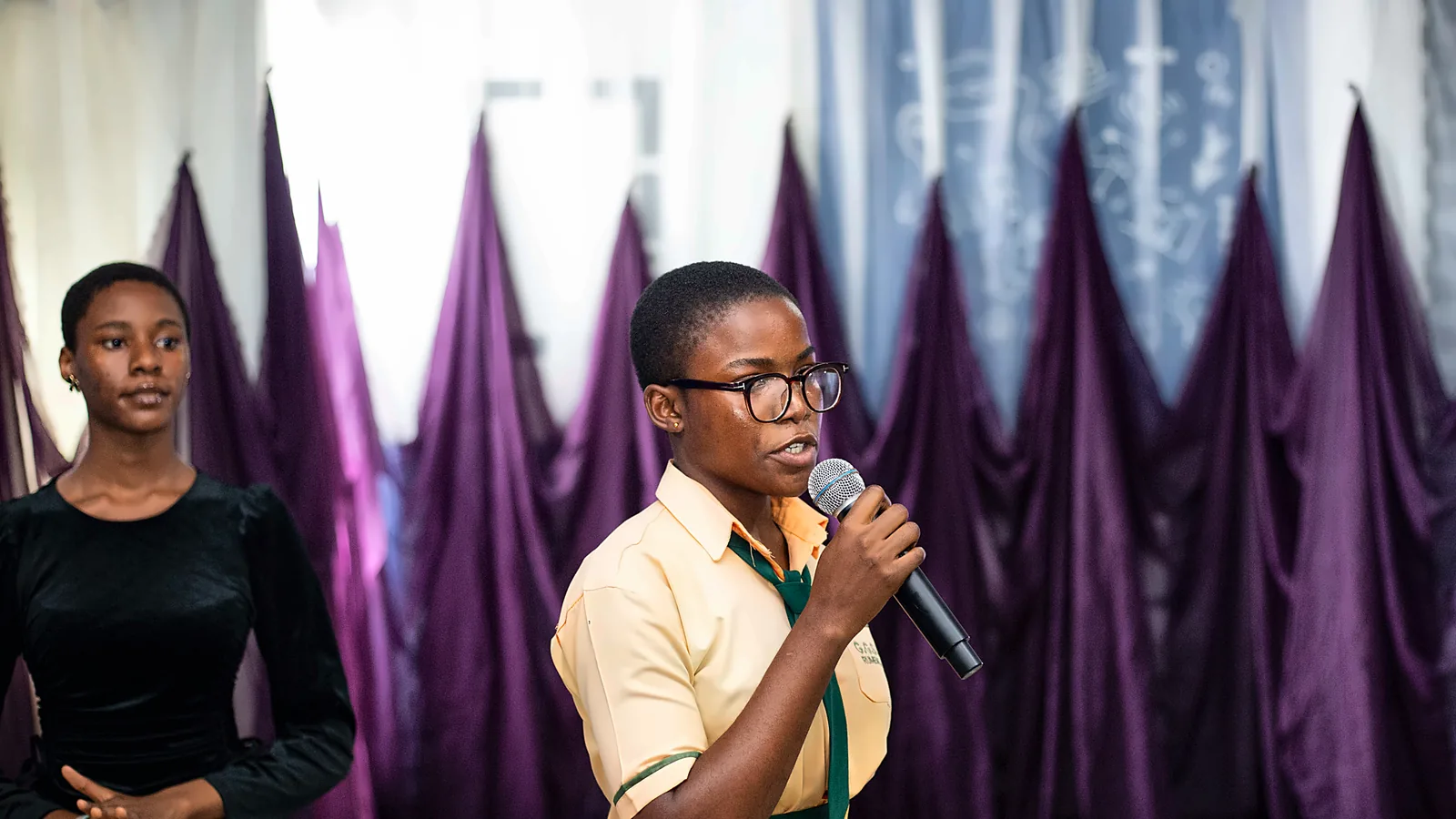
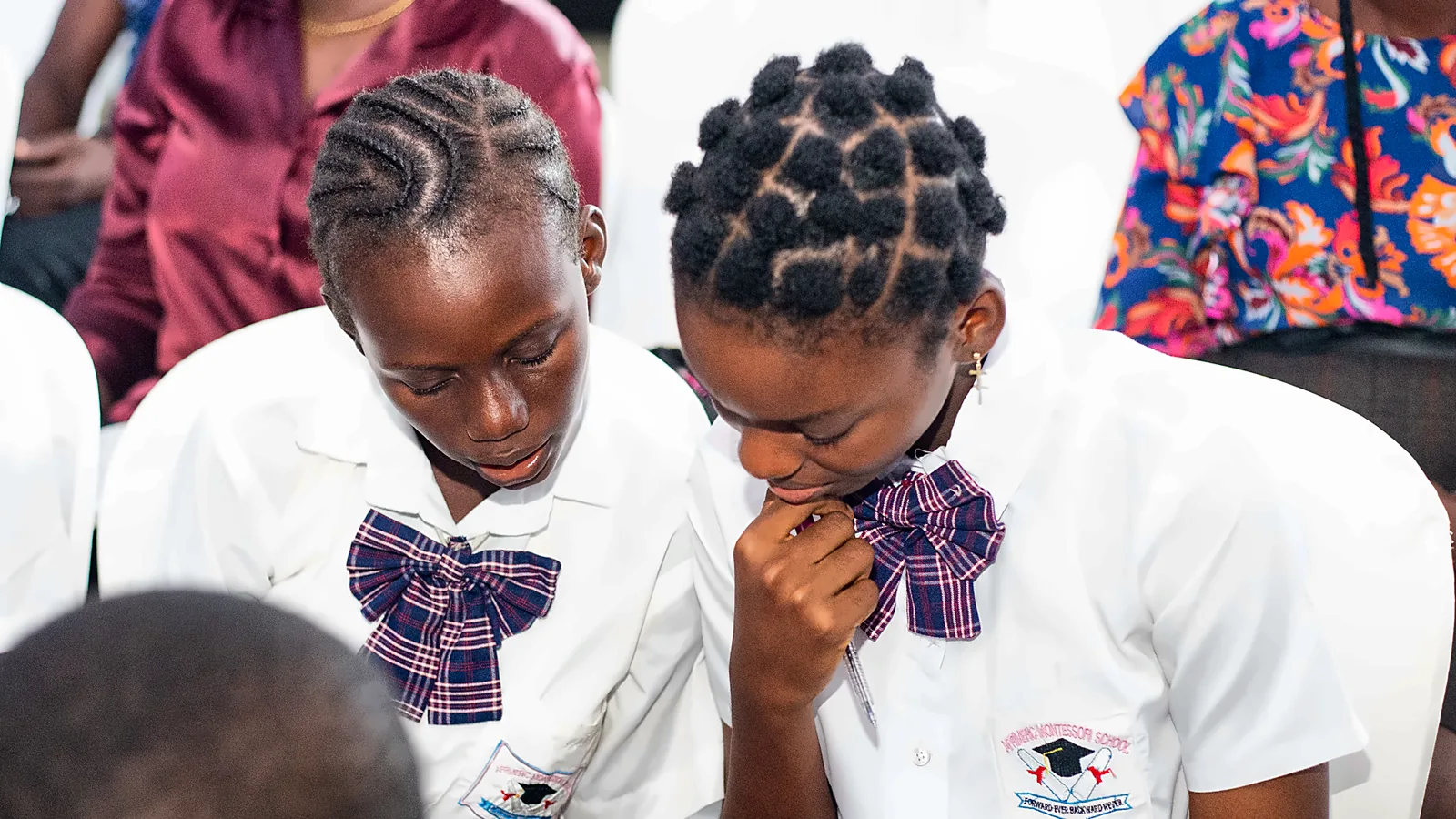
She drew on what TMF sees in TechSpark classrooms, where the programme has reached more than 4,980 students in 20 schools and learning centres across eight local government areas in Rivers and Ondo States. Girls often hesitate to speak or ask questions at first, then grow visibly more confident as a session goes on. That shift, from hesitation to confidence, is what early exposure makes possible.
Information is only power if you use it
Felista Aku, MBA, Senior Partnerships Manager, AfriLabs
Felista leads partnerships at AfriLabs, a pan-African network of more than 500 innovation hubs across 53 countries. She opened the panel with a challenge: "The person who has information and does nothing with it is in the same position as the person who has no information at all."
Knowing that opportunities exist is only the first step. She urged participants to act on what they learn, and to stop waiting for their work to be noticed. "Your work cannot speak for itself. You have to be vocal about your abilities."
Her advice to the girls on the call was direct: "Be vocal about your capabilities, and put yourself in the rooms that matter."
There has never been an easier time to start
Eunice Jacob Gigi, Lead Backend Engineer, IpayBtc Technologies
Eunice began her career in nursing before changing direction to become a software engineer. She now builds products across fintech, Bitcoin and health technology. Her story is a reminder that there is no single timeline for success.
She told participants that the tools to begin are closer than ever. "We live in a world where access to technology has never been this easy."
Her emphasis was on mentorship, in both directions. Girls should seek out mentors, become mentors to other girls, and share the opportunities they find instead of keeping them to themselves. One girl's opportunity can open the door for the next.
Visibility is not the same as influence
Joy Akhanolu, Director, CMX Connect Port Harcourt; Chapter Lead, She Code Africa Port Harcourt
Joy builds the communities that bring hundreds of people into Port Harcourt's technology ecosystem, so she spoke about what real participation looks like. Her warning was clear: "Don't confuse being visible with having influence. You can have thousands of followers and still have no meaningful say in the decisions that affect your school."
She also spoke about safety online, and made a point that is often missed. Girls are told to protect themselves, and they should. But, she said, "precautions matter, but they don't address the behaviour of the people who exploit or harass others." Keeping girls safe online is everyone's responsibility, not only theirs.
What this means for our work
The four perspectives point to the same practical agenda: exposure to what technology careers involve, skills built through regular practice, mentors and community, and the confidence to speak up. These are the things TMF's programmes are designed to provide.
- TechSpark brings technology career exposure to students through conferences, school visits and support for teachers.
- The Scholars Programme offers structured training in Software Engineering, Data & Analytics and Cybersecurity, with no prior coding experience required.
- Our Volunteer Programme connects working professionals with young people who need to see the path.
The webinar was open to everyone, and young men joined the conversation too. That matters. Investing in girls' rights is not a conversation for girls alone.
Conversations like this one are where the work starts, not where it ends. TechSpark now reaches students in 20 schools and learning centres across two states, and every new partner helps the next girl get her first real look at the field.
About the speakers
Barr. Omotoyosi Edeboh is the Executive Director of TalentMakers Foundation. She is a lawyer, development professional and Associate member of the Institute of Chartered Secretaries and Administrators of Nigeria (ICSAN).
Felista Aku, MBA is Senior Partnerships Manager at AfriLabs, where she leads strategic partnerships, fundraising and partner engagement. She previously coordinated AfriLabs' Annual Gatherings, including the 2019 edition at the African Union headquarters in Addis Ababa.
Eunice Jacob Gigi is Lead Backend Engineer at IpayBtc Technologies. She moved into technology from nursing, has worked across fintech, Bitcoin and health technology, and mentors young women.
Joy Akhanolu is a community and operations professional. She is Director of CMX Connect Port Harcourt, Chapter Lead at She Code Africa Port Harcourt and a core team member at GDG Cloud Port Harcourt.
Zuwaira Ibrahim (facilitator) is TMF's Programmes and Impact Intern. She supports programme coordination and impact tracking across TechSpark and the Scholars Programme.
Saviour N. Koki (guest introducer) is studying geology at Rivers State University. After completing TMF's Scholars Programme in Cohort 1, he progressed into an AI Product & Solutions internship. Now a TMF volunteer, he is working towards AI and geospatial solutions that bring the two fields together.
Frequently asked questions
What is TalentMakers Foundation?
TalentMakers Foundation (TMF) is a Nigerian nonprofit that builds technology talent through exposure, training and mentorship. Its programmes include TechSpark, the Scholars Programme and the Volunteer Programme. TMF has its registered office in Abuja and its principal operational base in Port Harcourt, Rivers State.
What is the International Day of the Girl Child?
It is a United Nations observance held every year on 11 October. It draws attention to girls' rights and the challenges they face. The 2026 theme was "End child marriage and invest in girls' rights".
How does technology connect to girls' rights?
Much of education, work and opportunity now runs through digital tools. A girl without digital access or skills can miss opportunities she is fully capable of taking. Digital access is part of what it means to invest in her rights.
How can a Nigerian girl start a career in technology?
Start with what you already enjoy, and find the technology roles connected to it. Choose one direction, practise regularly, finish small projects and find a mentor. Structured programmes such as TMF's Scholars Programme add training, mentorship and a clear next step.
Who can apply to TMF's Scholars Programme?
Eligibility and application dates are on the apply page. No prior coding experience is required. Applicants are selected through a structured assessment of digital literacy, aptitude and workforce readiness.
Be part of what comes next
- Are you ready to build a career in technology? Explore the Scholars Programme.
- Do you work in technology? Mentor and share what you know through our Volunteer Programme.
- Do you lead a school, institution or alumni network? Invite TechSpark to your students.
- Are you a company, foundation, government agency or development partner, in Nigeria or abroad? Partner with us by hosting a session, lending speakers or mentors, providing devices, or sponsoring a school visit.
Keep reading: Nigeria does not have a talent shortage. It has an exposure gap.